Spring semester 2026
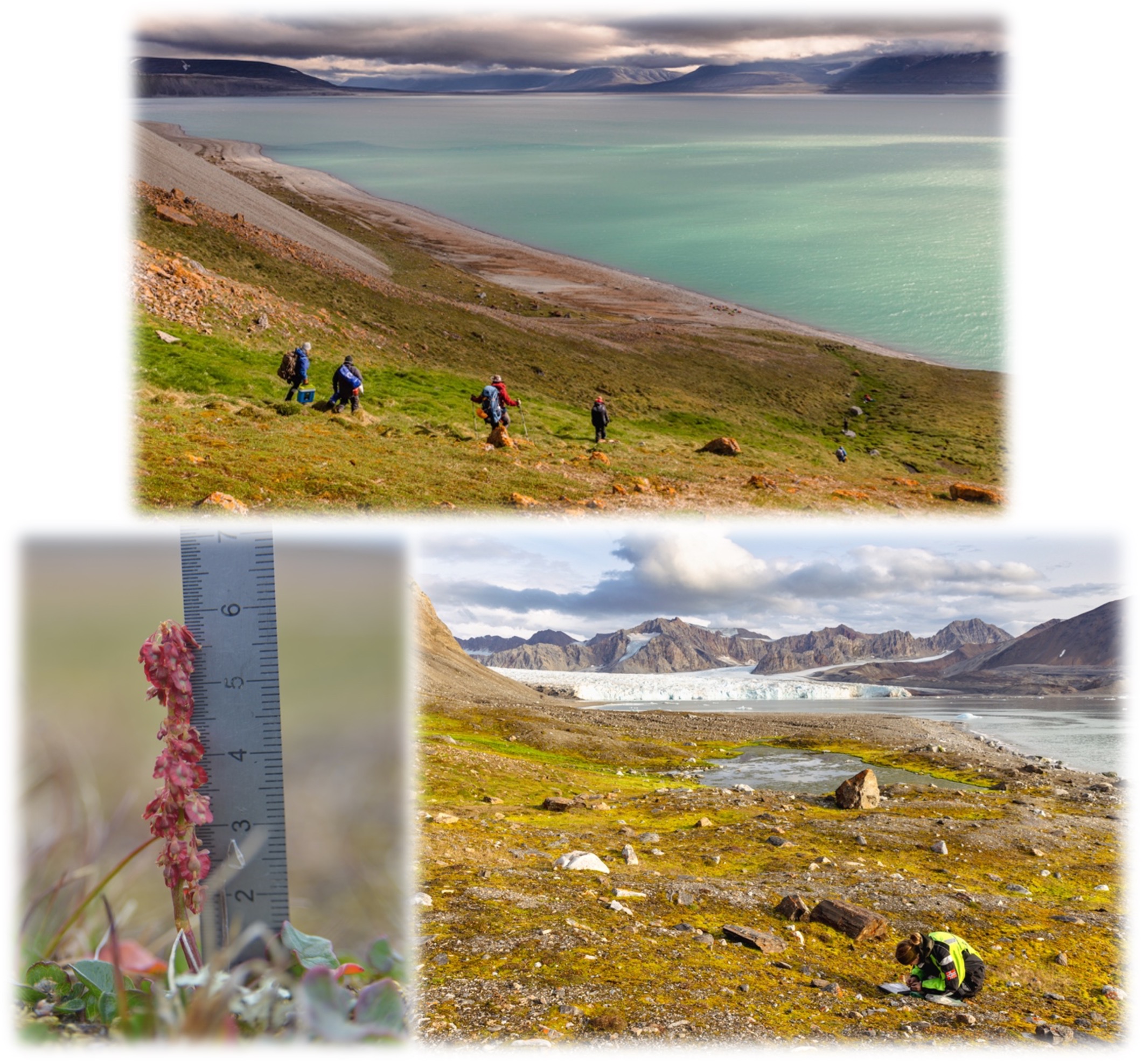
- Plant surveys and trait measurements in Svalbard ©Lena Bakker & Simone Fior
Drivers and vegetation responses in the Greening Arctic: Insights from Svalbard
Jana Rüthers
The Arctic is warming significantly faster than the global average, with regions like the Svalbard archipelago experiencing temperature increases up to six times higher. This rapid change is already reshaping ecosystems, particularly through shifts in vegetation structure and dynamics. One of the most visible trends is the “Greening of the Arctic,” characterized by increased plant biomass, poleward species expansion, and the appearance of non-native species. However, this greening is not occurring uniformly across the Arctic, and the underlying causes remain uncertain. Our interdisciplinary project aims to explore whether local soil variability and microbial processes contribute to these vegetation changes. To address this, we are combining fieldwork in Northern Norway and Svalbard with controlled greenhouse experiments at ETH Zurich. Our methods include vegetation surveys, detailed soil analyses, and the collection of seeds and soils for experimentation. Although the research is ongoing, early results suggest that, beyond warming alone, factors such as soil properties and altered plant competition dynamics are shaping Arctic plant communities. As warming may accelerate soil development, we could see further greening in the near future. Some species appear to respond flexibly to these changes, potentially enhancing ecological resilience but also amplifying vegetation expansion. Others, particularly Arctic specialists, may face increasing pressure, risking suppression or even local extinction under future climate scenarios.