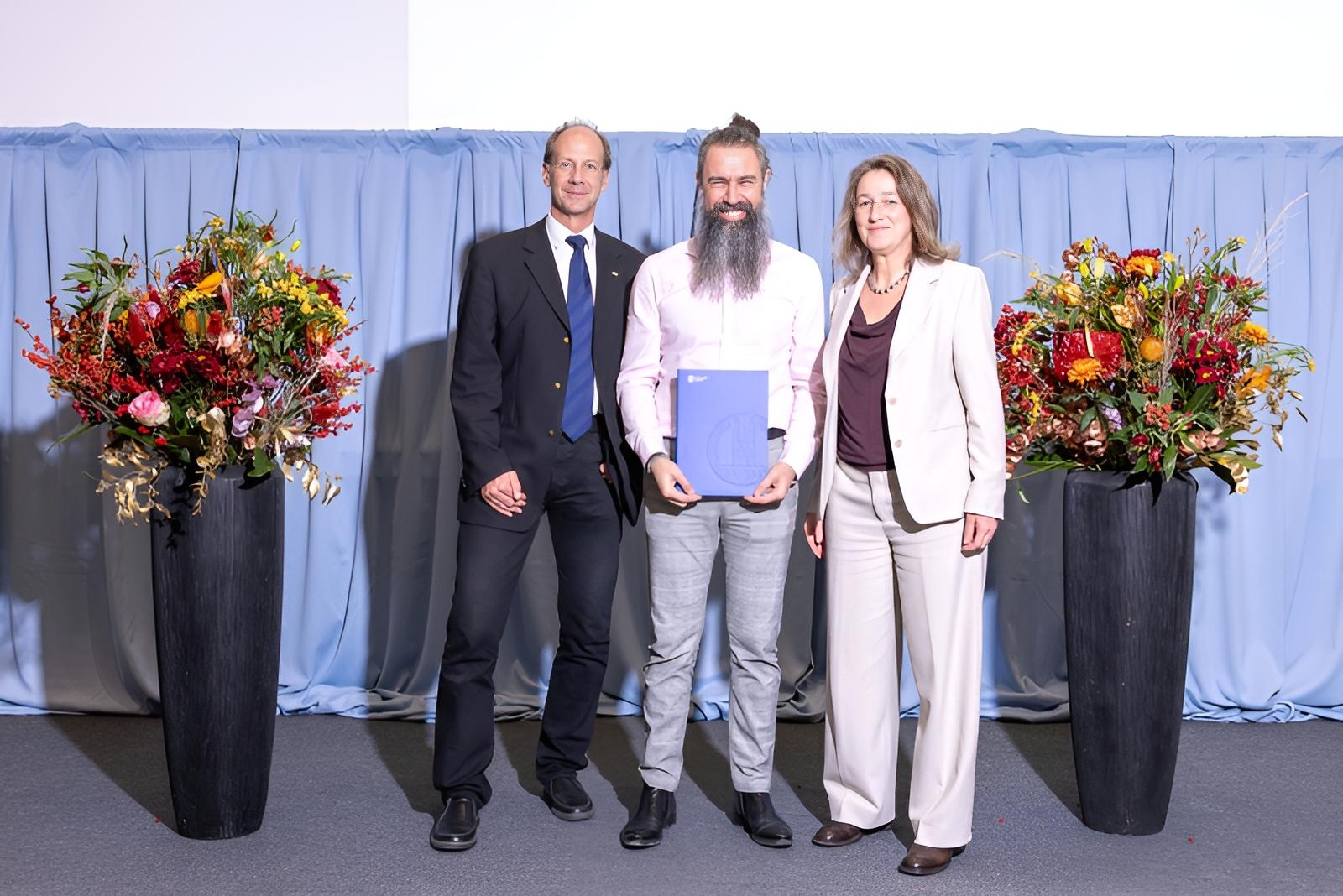
Faculty of Science awards dissertation distinction to Cengiz Akandil
The Faculty of Science has awarded Cengiz Akandil a distinction for his PhD thesis, “Impact of Industrial Human Activity Quantified by Artificial Light at Night on Arctic Ecosystems”. Supervised by Prof. Dr. Gabriela Schaepman-Strub, his work introduces a novel approach to assessing industrial activity in the Arctic using light pollution, enabling to link economic activity with ecological processes.
His research shows that 5.1% of the Arctic is affected by light-emitting human activities, the majority of which originates from oil & gas extraction. He found that fire occurrence is 2.5 times higher inside areas lit by human activity compared to control areas. He also demonstrated that vegetation greenness and its annual trends from 2000 to 2023 differ significantly in lit area compared to control regions. While most lit area across the Arctic exhibits higher greenness, this pattern is reversed for extractive industries. Overall, his results indicate potential feedback mechanisms between climate warming and industrial activities in the Arctic.
Understanding the impact of past and ongoing human activities on Arctic ecosystems is essential for the future sustainability of the region. Alongside growing evidence that Arctic resource extraction has sparked socio-environmental conflicts, disproportionately affecting Indigenous territories and livelihoods, Cengiz shows that industrial activities in the region affect much more than just the visible landscape transformations like built-up areas or light pollution, but fundamentally altering ecological processes that underpin cultural and community well-being.