Navigation auf uzh.ch
Navigation auf uzh.ch
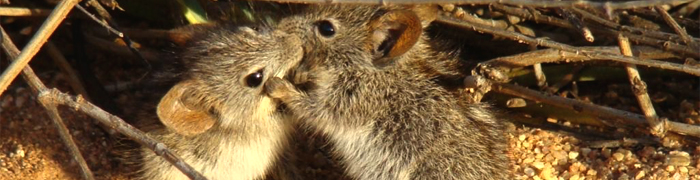
The main goal of our research is to understand how evolved physiological mechanisms allow animals to behave adaptively in their changing natural environment. Our research interests focuses on how hormone secretion is influenced by the environment, what the physiological consequences are, and how hormones influence behavior. We perform field studies and experiments under standardized laboratory conditions, where we mimic the natural situation. Our study species is the African striped mouse, which shows high social flexibility, ranging from solitary living to living in extended family groups.